
Family-owned · Colorado Springs Local
Plumbing Permits and Rough Inspections
Licensed master plumber Marvin Guida handles permit compliance so your project passes inspection the first time.
Free estimate
Tell us what you need
Three fields. We will reach out to you ASAP.
What a Plumbing Rough Inspection Actually Covers
A plumbing rough inspection happens after your supply lines, drain lines, and vent stack are in place but before the walls close up. The inspector is looking at pipe sizing, slope, support spacing, and whether the work meets the International Plumbing Code as adopted by El Paso County. If it doesn't pass, the walls don't close and the project stalls. Marvin Guida holds Colorado Master Plumber license #MP.03001524 and has navigated this process for 25 years, which means he knows what inspectors look for before they show up. Call (719) 774-7451 to talk through what your project requires.
Permit requirements in Colorado vary by scope. Replacing a toilet or faucet typically doesn't trigger a permit. Relocating drain lines, adding a bathroom, or running new supply piping almost always does. The risk of skipping a required permit isn't just a fine. It's a failed sale when a buyer's inspector flags unpermitted work, or an insurance claim denied because the repair wasn't done to code. Marvin handles plumbing pipe repair and fixture installation work that falls well within permit territory, and he'll tell you upfront whether what you're asking for needs one. Every job is different, so contact Summit Peak Plumbing LLC for an accurate estimate on permitted work.
The Process
How Permitted Plumbing Work Gets Inspected Inspected
Colorado permit inspections follow a defined sequence. Knowing where you are in that sequence keeps your project moving.
- 01
Permit Pulled Before Work Starts
The permit application goes in first, before any pipe moves. Marvin submits the scope of work, the fixture count, and the drainage plan to the building department. Work that starts without a permit gets tagged for removal, not just fined.
- 02
Rough Inspection: Pipes Visible, Walls Open
This is the critical one. The inspector checks pipe material, size, slope on drain lines (typically 1/4 inch per foot), vent connections, and pressure testing on supply lines. Everything has to be accessible. Once the inspector signs off, the walls can close.
- 03
Final Inspection After Fixtures Are Set
After trim-out, a second inspection confirms that fixtures are properly connected, shut-offs work, and there are no active leaks. Marvin walks through the completed work with the inspector so nothing gets missed on a punch list.
When You Need a Permit and When You Don't
Permit Required
New bathroom additions, relocating existing drain or supply lines, adding a water heater in a new location, installing a pressure reducing valve as part of a larger system change, and any work that requires cutting into walls to re-route pipe.
Typically No Permit Needed
Like-for-like fixture replacement (same location, same connections), garbage disposal replacement, standard faucet swaps, and minor drain repairs at accessible cleanouts. If the pipe doesn't move and the fixture footprint doesn't change, you're usually clear.
Gray Area: Ask First
Water heater replacements in Colorado depend on the county and whether you're changing fuel source or location. Water tank installation in a new spot almost always needs a permit. Marvin will tell you straight whether your job sits inside that line or outside it.
Unpermitted Work: The Real Cost
A real estate transaction is the most common place unpermitted plumbing surfaces. Buyers' inspectors flag it, title companies hold closings, and the seller ends up paying to open walls, get the work inspected retroactively, and close them again. The permit fee is cheap by comparison.
Why It Matters
What Inspectors Actually Fail Jobs For
- 01
Insufficient Drain Slope
Drain lines need to fall consistently to drain. Too little slope and solids collect. Too much and water outruns the solids. Both fail. The target is 1/4 inch of drop per foot of horizontal run for lines 3 inches and under.
- 02
Missing or Incorrect Venting
Every fixture needs a vent connection to prevent siphoning the trap seal. Wet venting is allowed in Colorado for certain configurations, but the sizing rules are specific. An unvented drain doesn't smell like a problem until the traps go dry and sewer gas enters the house.
- 03
Wrong Pipe Material or Fittings
Mixing materials without the correct transition fittings, using DWV fittings on pressurized lines, or running the wrong-grade pipe underground are common DIY errors that inspectors catch on sight. The fix after drywall is closed is significantly more expensive than doing it right the first time.
- 04
Failed Pressure Test on Supply Lines
Before rough inspection sign-off, supply lines get pressure tested. The system has to hold static pressure for a set duration without dropping. A slow leak anywhere in the rough plumbing shows up here. Catching it before drywall is the entire point of the inspection.
A Licensed Master Plumber on Every Permitted Job
Permit Work Marvin Handles Regularly
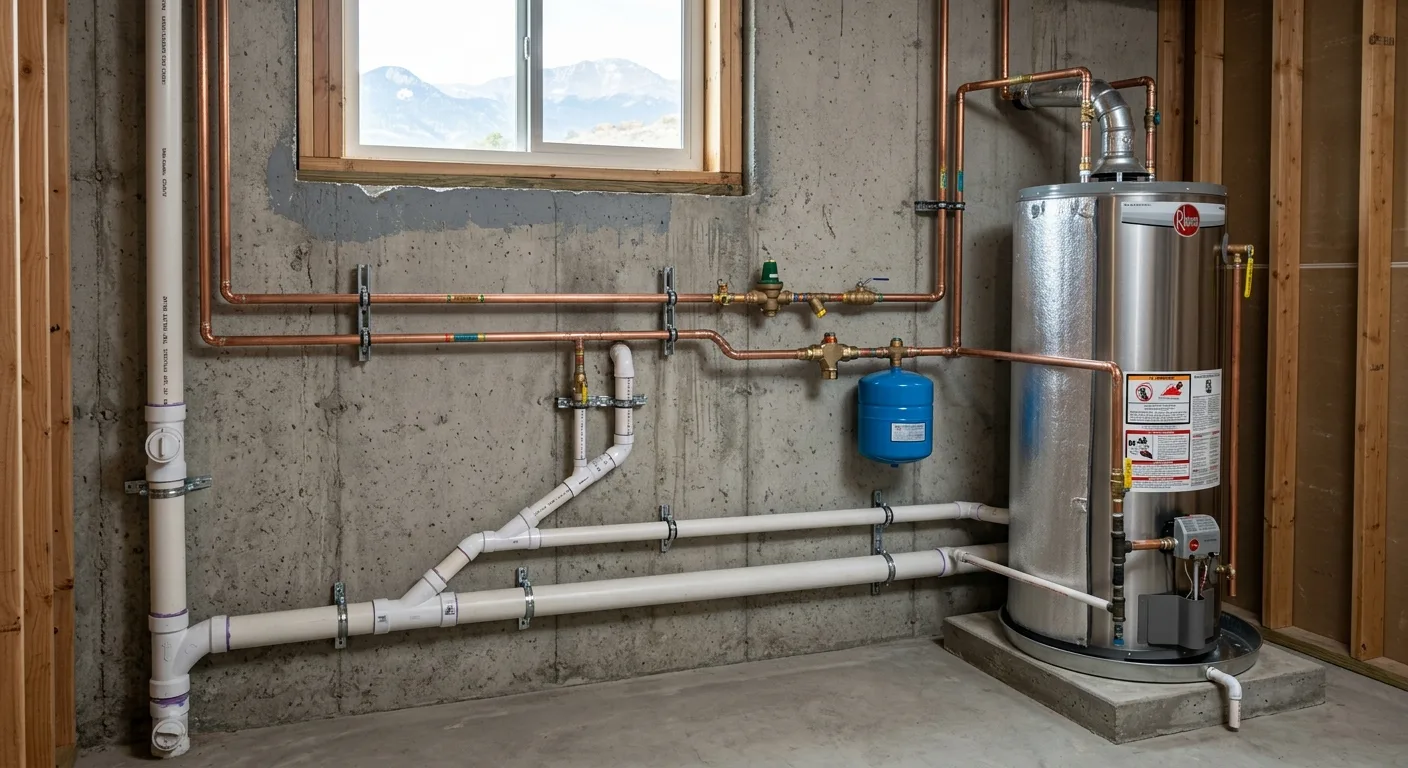
Summit Peak Plumbing LLC takes on permitted plumbing work across El Paso County, from straightforward water heater installs that require county sign-off to full bathroom rough-ins.
- Water heater installation with permit and inspection
- Required in El Paso County when changing location or fuel source
- New bathroom rough-in, supply, drain, and vent
- Sized and sloped to pass rough inspection before walls close
- Pressure reducing valve installation on municipal supply
- Permitted scope varies; Marvin confirms requirements before starting
- Drain and supply relocation for remodels
- Kitchen and bathroom reconfigurations that move existing rough plumbing
Questions About Plumbing Permits
Does replacing a water heater require a permit in El Paso County?
Can a homeowner pull their own plumbing permit in Colorado?
What happens if I skip a required plumbing permit?
How long does a plumbing permit take to get approved in El Paso County?
What is checked during a plumbing rough inspection specifically?
Do I need a permit to add a bathroom sink or move an existing one?
What is checked during a plumbing rough inspection?
Ready to Start a Permitted Plumbing Project?
Call Marvin before the walls close, not after.